
Master Effective Positive Reinforcement Techniques for Dog Training

Setting the Stage for Successful Canine Training
For pet owners, training their dogs can often feel like a daunting task. However, understanding how to implement positive reinforcement techniques can transform the training experience into a rewarding bonding opportunity. Research has shown that these methods not only improve obedience but also foster a deeper connection between dogs and their owners.
Incorporating effective positive reinforcement techniques fundamentally changes how dogs perceive commands and behaviors. This approach includes rewarding good behavior with treats, praise, or play, which can lead to a more enthusiastic learner. As a result, dogs are more likely to repeat actions that are positively reinforced.
With this understanding, it’s essential to explore a range of strategies. In this article, we will highlight the Top 5 effective positive reinforcement techniques that can enhance your dog training journey and lead to a happier, well-behaved companion.
Top 5 Effective Positive Reinforcement Techniques for Dog Training
Training your dog can be one of the most fulfilling experiences shared with your furry friend, yet it often poses challenges. Harnessing the power of positive reinforcement not only enhances the bond between you and your pet but also results in effective training outcomes. In this expanded exploration, we delve into the top five techniques, starting with the effective and progressing to the exceptional.
5. Clicker Training
Clicker training stands out as a precise and clear method of communication with your dog. This technique utilizes a small handheld device that produces a distinctive click sound, which serves as a marker indicating that the desired action has been performed correctly. The clarity of the click facilitates a strong association in your dog’s mind between the sound and a forthcoming reward, usually a treat.
Here’s how to optimize clicker training:
- Timing: Achieve accuracy by clicking at the exact moment your dog demonstrates the desired behavior. This immediate feedback helps solidify the behavior in your dog’s repertoire.
- Consistency: Consistent use of the clicker every time the behavior is exhibited strengthens the association and accelerates learning. Over time, this consistent pairing clarifies expectations for your dog.
- Follow-Up: Always follow the click with a reward. Initially, rewards could be edible treats, but you may gradually incorporate praise or play as alternatives once the behavior is established.
While clicker training requires an initial investment of time and effort for your dog to understand the system, its precision and clarity often yield more rapid and reliable results compared to some other methods.
4. Treat-Based Rewards
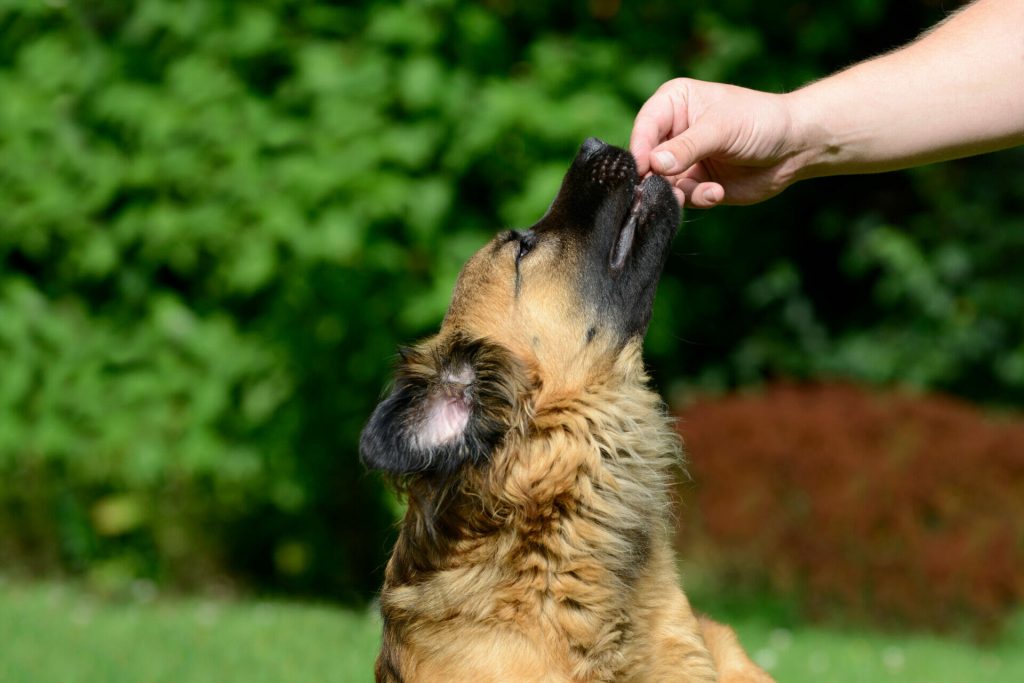
Using treats as a form of positive reinforcement is a straightforward and highly effective training technique. Rewards that excite your dog can significantly boost training success. This method is more than just about feeding; it involves selecting the right kind of treat that holds your dog’s interest and motivates behavior change.
Effective strategies for treat-based rewards include:
- High-Value Treats: Reserve particularly enticing treats for training sessions, ensuring they act as a powerful motivator. Special treats help maintain high levels of interest and focus during training.
- Variety: Change up the treats to sustain your dog’s enthusiasm and prevent boredom. Rotating between commercial treats and healthy home-cooked options can help maintain a fresh and engaging training experience.
- Reward Timing: Timing is crucial; give the treat immediately following the desired behavior to create a strong link and reinforce learning.
This method effectively addresses both basic commands and complex behaviors and is a staple in many training regimens due to its simplicity and effectiveness.
3. Praise and Affection
For many dogs, nothing beats the emotional reward of love and attention from their human companions. Dogs, being inherently social animals, often respond exceptionally well to verbal praise and physical affection as rewards, harnessing their desire for social interaction to encourage positive behaviors.
Maximize the impact of praise and affection with these approaches:
- Enthusiastic Praise: Use an upbeat tone and engaging body language to show your excitement. Dogs are adept at reading human emotions and respond well to genuine enthusiasm.
- Engagement: Establish eye contact and physically get close to your dog, reinforcing your approval of their actions.
- Physical Touch: Incorporate petting, belly rubs, or a favorite activity as part of the reward. Physical contact can strengthen your bond and disclose your affection.
The key to this technique is building a foundation of trust and affection, creating a warm and supportive environment that enhances learning and deepens your relationship with your pet.
2. Training Games
Turning training sessions into games makes the learning process enjoyable and enriching for both you and your dog. Games are not just play; they serve as dual-purpose activities that release energy while reinforcing learned commands and behaviors in a positive, stress-free manner.
Exciting training games include:
- Hide and Seek: Engages your dog’s natural instincts and requires them to use verbal cues and problem-solving skills to locate you.
- Tug-of-War: Provides a playful way to reinforce commands such as “drop it” or “take it” while satisfying your dog’s play instincts.
- Obstacle Courses: Combines agility training with obedience commands, enhancing both physical and mental agility.
Incorporating games into training sessions ensures that your dog remains engaged and motivated, fostering a deeper bond and promoting positive behaviors in an organically rewarding way.
1. Consistency and Patience
At the pinnacle of effective dog training is the principle of consistency and patience. Despite being understated, these core tenets facilitate a predictable and clear training environment that helps dogs thrive. Consistency in commands, rewards, and training schedules provides dogs with a framework to predict the outcomes of their behavior, encouraging faster learning.
To implement these principles effectively, consider:
- Be Consistent: Regularly use the same commands, cues, and training techniques. Predictability enhances learning and helps solidify behaviors in your dog’s routine.
- Stay Patient: Acknowledge that learning is a gradual process. Some sessions may not lead to immediate improvements, but persistence often pays off as small incremental gains accrue to larger transformations.
- Adaptability: Be prepared to adjust techniques and pacing based on your dog’s unique learning style and needs, as flexibility can be crucial to overcoming training roadblocks.
The path to a well-trained dog is one of endurance and commitment. Patience and consistency not only underpin successful training but also establish a secure, trusting relationship between you and your pet, fostering a cooperative and happy companionship.
Through thoughtful application of these techniques, you can cultivate an enriching training routine that not only teaches your dog valuable skills but also deepens the trust and joy shared between you and your four-legged companion.
| Category | Description |
|---|---|
| Immediate Rewards | Using treats or praise right after the desired behavior reinforces the action in the dog’s memory, creating a strong connection between the action and the reward. |
| Consistency in Training | Consistent use of verbal cues and rewards ensures that dogs understand what is expected, streamlining their learning process. This can lead to a quicker response to commands. |
| Variety of Rewards | Incorporating different types of rewards, such as toys, playtime, or affection, keeps the training sessions engaging and helps maintain the dog’s interest. |
| Positive Emotional Association | Utilizing positive reinforcement creates a strong emotional bond between the dog and trainer, as dogs are more likely to feel supported and motivated when they associate learning with positive experiences. |
Frequently Asked Questions about Positive Reinforcement in Dog Training
What is positive reinforcement in dog training?
Positive reinforcement in dog training involves rewarding a dog for good behavior to encourage it to repeat that behavior. It is based on the principle that behaviors followed by rewards are more likely to occur again. Rewards can include treats, praise, toys, or other forms of affection. This method contrasts with punishment-based training, focusing instead on reinforcing desired behaviors.
Why is positive reinforcement effective for dog training?
Positive reinforcement is effective because it builds a strong, trusting relationship between the dog and the owner. Dogs learn faster and with less stress when their actions lead to positive outcomes. This technique enhances communication and helps in fostering a cooperative, eager-to-learn attitude in dogs. Consistently rewarding desired behaviors encourages dogs to repeat them, making training sessions successful and enjoyable for both parties.
What types of rewards work best for positive reinforcement?
The best rewards for positive reinforcement depend on what motivates your dog. Commonly used rewards include treats, verbal praise, petting, playtime, or their favorite toys. It’s essential to know your dog’s preferences and what excites them the most. Variety can also keep your dog engaged and motivated during training sessions.
How often should rewards be given during training?
Initially, rewards should be given every time the dog performs the desired behavior. This helps establish a clear connection between the behavior and the reward. As your dog starts to learn the behavior, you can gradually shift to a variable reinforcement schedule, where rewards are given intermittently. This ensures that the dog remains motivated and capable of consistently performing the behavior without expecting a reward every time.
Can positive reinforcement address all behavioral issues?
While positive reinforcement is an effective method for teaching and reinforcing desired behaviors, some complex behavioral issues may require additional strategies or professional guidance. In cases where a dog exhibits serious behavioral challenges, such as aggression or anxiety, consulting with a professional dog trainer or behaviorist can provide tailored solutions. However, positive reinforcement remains a key component in addressing and modifying most undesired behaviors.
Conclusion
In the fascinating realm of canine behavior, effective positive reinforcement techniques have emerged as the cornerstone of successful dog training. Throughout the exploration of these methods, it has become evident that patience, consistency, and empathy define the art of nurturing well-mannered dogs.
Key Takeaways
- Timely Reinforcement: Encouragement promptly delivered encourages desired behaviors, serving as a bridge between command and compliance.
- Diverse Rewards: Offering a variety of treats, toys, or verbal praises ensures ongoing interest and adaptability to different training contexts.
- Clear Communication: Establishing precise commands aids in preventing misunderstandings, cementing the bond between pet and owner.
- Consistent Conditioning: Repetitive reinforcement ingrains habits, solidifying the foundations for advanced training regimens.
- Gradual Challenge Increase: Progressively escalating difficulty transforms rudimentary responses into complex behavior chains.
As dog enthusiasts delve deeper into training techniques, curiosity often uncovers the myriad benefits associated with positive reinforcement. Yet, it’s crucial to understand that the journey is dynamic; what works triumphantly for one canine might require tweaks for another. Importantly, these techniques, rooted in respect and understanding, bolster not just obedience but foster a profound companionship grounded in loyalty and trust.
In the broader scope of pet ownership, integrating such humane and intellectually stimulating approaches has been proven invaluable. It paves the way to a more harmonious coexistence, inspiring pet parents to continue exploring and adapting their training strategies. As we champion these techniques, the potential to contribute to a world where positive reinforcement leads to happier, healthier pets is compelling. In conclusion, whether you’re a seasoned trainer or a novice dog lover, embodying these techniques holds the promise of unlocking new dimensions in your bond with your furry companion.